 Neotech Community FM Radio 90.4 FM
First Community FM Radio In Chhattisgarh
About Our Community Radio
Neotech Community FM Radio run by Anugrah Vidhya Niketan Society. Neotech Community FM Radio was started on January 31, 2012. It is started with own resources and community effort. Still we need some basic tools and resources.
Neotech Community FM Radio, Ambikapur was Inaugurated by Hon'ble Chief Minister Dr. Raman Singh on May 21, 2012. Neotech Community Radio still struggling for their basic requirement.
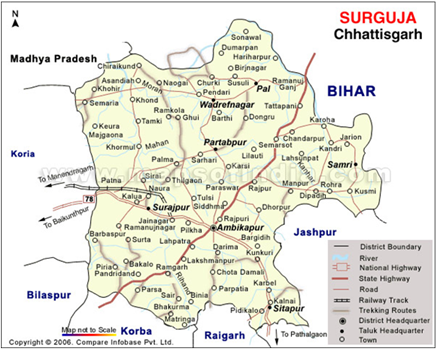
Surguja district is located in the northern part of Chhattisgarh. The district is surrounded by the borders of Uttar Pradesh, Jharkhand, Orissa and Madhya Pradesh states. This district has over extension between south-eastern parts of Vindhyachal-Baghelkhand region of peninsular India.
It lies between 23°37'25" to 24°6'17" north latitude and 81°34'40" to 84°4'40" east longitude. 244.62 kilometers (152.00 mi) long east to west and 67.37 kilometers (41.86 mi) broad north to south, this land has as area of about 16,359 square kilometers (6,316 sq mi). The district is spread over high lands, plateaus, hills and plain lands. A huge portion of its total area is covered by forests. The major rivers flowing through the district are Kanhar, Moran, Rihand River and Mahan. The climate of the district basically includes hot summer and even distributed rainfall in the monsoon season. The region falls in the Tropical Thermal belt. Soils of Surguja District are classified in four major classes and these are Red and Yellow Soils, Alluvial Soil, Laterite Soil and Black Soil.
Culture of Surguja district is mainly tribal in nature as tribal population constitutes the major portion of the total population. Among these primitive tribes are Pando and Korwa, who still live in forest areas. Several festivals, music and dance forms make the culture of Surguja district a unique entity in itself. Saila Dance, Suwa Dance, Karma Dance are some of the popular traditional dances of the district. These dances are performed on festivals and other occasions.
Radio as an affordable and sustainable ICT technology will not only supplement the information dissemination processes, but will also offer a platform of 'accessible' media to the farmer community who can share their experiences with a wider audience on all agriculture related issues. Community participation, volunteerism and part management of the station by the community are the contributing factors for the success of Community Radio.
Agriculture is a very vast field. One of the greatest advantages of radio is that radio programs can be produced in the local language of the people that will make the radio station. A single issue can be broadcast in different formats and depending on the subject, one or more formats can be used for the same subject. Some such program formats are:
Drama - Combines education and entertainment of a specific topic e.g. a case study of a new way to cultivate crop. The duration of the program can be 15 to 20 minutes.
Features - Are short programs with a focus on factual themes such as pest control, Government policy, crop rotation etc. The duration of program could be of five to ten minutes.
Interviews - Includes a dialogue between the host and a guest expert. The expert could be a local farmer with specialized knowledge of traditional practices or an agriculture scientist from the university.
Panels and discussions - These are perhaps the most interesting of all the radio programs, as they demonstrate different perspectives on an issue or question.
Documentary - Is an issue-based program that may or may not involve testimony of people on an issue. It walks the listener through an issue that is well researched before broadcast.
>Editorial - Is a broadcast that presents the opinion of the owner or manager or anyone who wants to share a point on subject.
Vox Populi - Means 'Voice of people' and features a popular opinion. It is different from an editorial in the sense that its recording is done outdoors.
REACH / POPULATION / Beneficiaries:
- The project would address the rural population of Sarguja district in Chhattisgarh.
-Awareness generation for 1.35 lakh rural population belonging to marginalized, disadvantaged, and deprived & living below poverty line as well as general public.
Developed by Akshay Tiwari, Ambikapur